
What is Digital Engagement?
5 Best Event Management Tools
- + 3 more...

As anyone who plans and coordinates events can tell you, a lot of work goes into making a memorable moment seem effortless.
Event management is a time-consuming endeavor, with countless moving parts, conflicting deadlines, and communication obstacles to master. In some cases, you almost need to be a magician to pull things off – but with the right event management tools, you can do what seems impossible.
The Impact of Events
According to Statista, the total size of the "party and event planner sector" in the United States was $4.08 billion U.S. dollars in 2021, and it's still recovering from the major shock of the pandemic. That's a sizable growing market, and with relatively low barriers to entry, it can be a promising industry for entrepreneurs to break into – especially if you have a knack for spectacular brunches or over-the-top birthdays even adults leave smiling.
One of the major challenges to entering event management has always been juggling all the components of the business – but there's help for that.
What Needs Do Event Management Tools Fulfill?
Event management tools come in two basic forms, all-in-one or purpose specific. And basically, they can be anything that helps streamline the work of creating and running an event of any scale.
Some things to consider when choosing event management tools include:
- Do you need an event website or mobile app?
- How will you promote the event?
- Do attendees need to register or get tickets?
- Will you need to create and update schedules?
- Will there be exhibitors or vendors?
- Will the event be in person, virtual, or a hybrid event?
Once you know what you need, choosing the correct tool or platform will be a cinch.
The Best Event Management Software
1. Cause Machine
Cause Machine is different from other event management tools. It's an all-in-one platform, allowing you to do everything from managing complex hybrid/virtual events and email marketing to restricted membership content. Cause Machine allows planners to start with a blank slate and build the event management solution that's right for them – all in one place. No need to juggle five different apps or pay for five different services.
Pros
- Drag & Drop Website Builder.
- eCommerce Store.
- Virtual or Hybrid events are easy to run and manage.
- All-in-one solution for scalability.
- Online Course Builder.
- Dynamic event management from registration, email communications, event tickets, and more.
- Custom membership options.
Cons
- Limited front-end design customization.
- Setup can take time, depending on the needs.
It's not easy to create and run the perfect event, but with event management tools like Cause Machine, it can go a little smoother. Set up a free demo on Cause Machine.
2. Eventbrite
Eventbrite is one of the best-known event management tools out there. If you've gone to an event that you needed to RSVP for in the last few years, chances are you've used it. The platform makes setting up registration or e-tickets easy, and with automated e-mail confirmations, it can give your small-to-medium-sized event a sense of professionalism. But it's important to note: Eventbrite doesn't do everything.
Pros
- Ease of use and familiarity.
- Create custom tickets and registration pages.
- Email reminders for attendees.
Cons
- Eventbrite only helps get plan the event – it's not designed to help with day-of needs.
- Relatively high fees.
3. Cvent
Cvent is an easy-to-use event management software that helps manage event registration and engagement. The platform can automate tasks like data analytics, event marketing, event registration, etc. to save time. You can manage attendees and build event reports to navigate every aspect of the event process.
Pros
- Plan and promote your event.
- Engage attendees.
- Capture leads and track ROI.
Cons
- Features can be time-consuming during setup.
- Clunky reporting.
4. A2Z Events
As its name implies, A2Z Events can help you handle almost every aspect of behind-the-scenes event management, from floorplan design and staff coordination to creating exhibitor and vendor portals. Its scale makes it ideal for large events like trade conferences or big weddings, but it's not as useful for smaller events, and does not include any public-facing features.
Pros
- Create the perfect event layout.
- Great for larger teams.
- Good for conferences and other big events.
Cons
- Lacks attendee-facing tools like a registration portal, event map.
- Overkill for most events.
5. Zoom Events
Zoom Events is a great video-conferencing tool that has taken Zoom's original purpose of virtual meetings to the next level with the ability to run dynamic events. With Zoom Events, you can host virtual/hybrid events, webinars, digital panel discussions, online courses, and more. Most people find it easy to navigate, and e-mail confirmations keep everyone on the same page.
Pros
- Easy and familiar to use.
- Host multiple virtual sessions at once.
- Connect your audience.
Cons
- Free version comes with time limits.
- Limited screen-sharing functionality.
Start Cause Machine
Starting with a community engagement strategy is the secret to building a successful organization in the long term. Cause Machine helps organizations build the plan of engaging a community well and then begin mapping out the technology to help support that strategy. We're certain that you'll find some great resources and powerful tools in Cause Machine to better engage your community. Learn how it can work for you here.
5 Best Association Management Software Platforms
- + 1 more...
The vast majority of associations are run by fewer than ten people – small teams who already rely on, or could benefit from, association management software. The truth is that each one of those associations requires a lot of hands-on administration, even if it's small. That administration is expensive and time-consuming and is basically a time suck for the few employees a small association has.
Despite that, it's still vital work – and association management software aims to help.
What Makes Association Management Software Different from Other Software?
A quality association management software platform can do everything from building a website to running a member database. They can automate email communications, payment collections, donations, event management, and make sure all the financial requirements of running an association are met. In short, they can free your team up to do the things that associations are really meant to do.
The problem lies in choosing the right association management software for your association, but we can help. Culled from hundreds of association management software options, here are five of the best.
The Five Best Association Management Software Platforms Right Now
1. Cause Machine
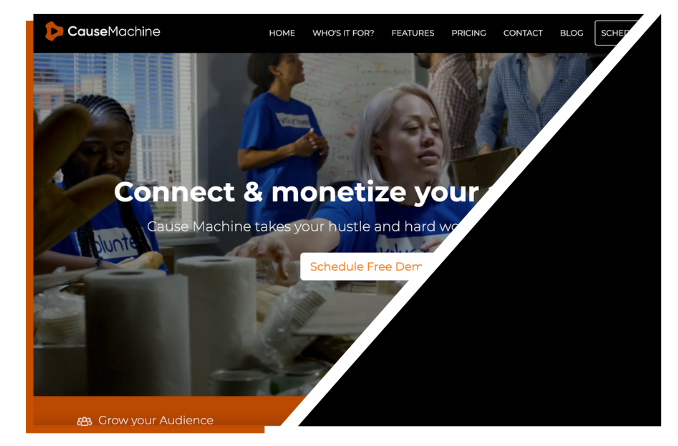
Up until now, we've introduced association management software options that are useful in a variety of situations – but Cause Machine is something different. The most versatile option by far, Cause Machine is an infinitely customizable platform that can meet all the needs of an association – large, small, or in between.
Building a cost-effective and practical web platform to manage your association is key for scalability and experience. You can even create members-only areas with added benefits too. Cause Machine can supercharge communications, help maintain the day-to-day, and even streamline association events. Cause Machine starts by defining your objectives and helps you build the platform to meet your organizational needs.
Great features include:
- Tailored software for specific association needs
- Drag and drop web builder
- Free trial and dedicated support
- Event management
- Email marketing tools
- eCommerce, membership billing, managed tiers, and more
- Dynamic CMS
- Job Board
- Launch Mobile Apps
- Free trial available
Especially for the thousands of small associations that need a practical association management tool, getting off the treadmill of hands-on administration is as easy as trying out the right association management software.
Get a tailored solution to your organization's needs. Schedule a free demo with Cause Machine to get back to doing what your association is really meant to do.
2. WildApricot
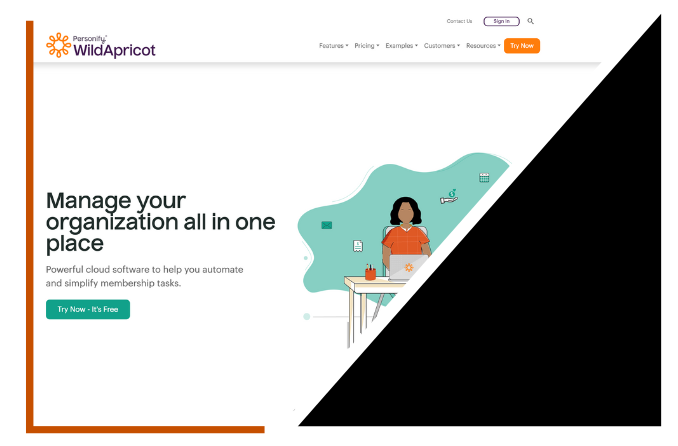
\WildApricot has steadily become one of the most visible association management software platforms, and that's because it comes with many of the features associations need. From a (basic) website builder to a built-in email system and a mobile app, it can be helpful to organizations of all sizes – and comes with a free trial period.
Great features include:
- Build websites and member directories
- Event Management
- Automate payments and renewals
- Free 60-day trial
3. GrowthZone
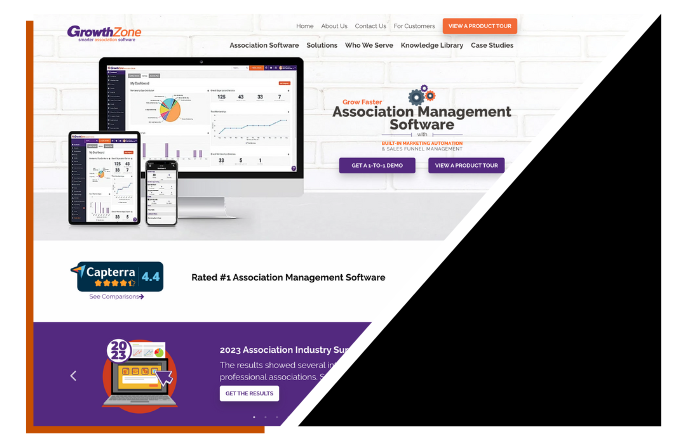
GrowthZone is an association management software option that is focused on what its name implies – growth! The basic plan includes everything that others do as well – including member management tools, financial tools, and the like – but it can be scaled up with marketing solutions and added "modules" as your organization grows, which is ultimately the whole point, right?
Great features include:
- Website builder with member and event management tools
- Marketing tools and sales funnel
- Payment processing
- Free demos and monthly payment plans
4. MemberLeap
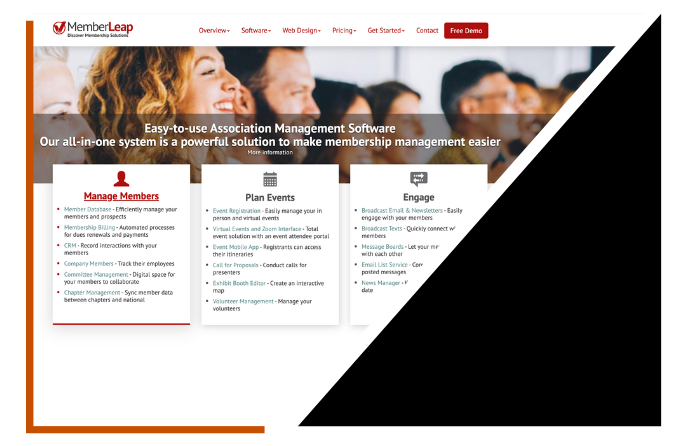
MemberLeap is an example of powerful association management software that is tailored for one specific segment of the association landscape. Along with all the basic functions of member and financial management, it features a convenient integration with QuickBooks. With 26.5 million businesses using QuickBooks in the US, that could be very useful!
Great features include:
- Member database with plans
- Integrates with QuickBooks for accounting
- CRM system
- Starts at $50/month, plus website setup packages from $1,800+
5.SilkStart
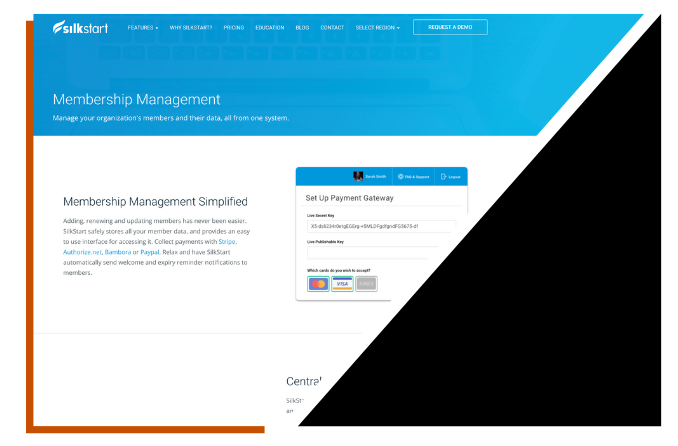
With SilkStart, small associations can get everything they need – and the "smooth" transition they hope for. This software is designed to be simple and easy to use for administrators, and its features are designed to get the job done. Features include job boards, donation pages, chapter integration, and mobile-friendly websites.
Great features include:
- Simple tools for website, members-boards, donations, and more
- Event management
- Job board
- Email Marketing
Get Started With Cause Machine
Starting with a community engagement strategy is the secret to building a successful organization in the long term. Cause Machine helps organizations build the plan of engaging a community well and then begin mapping out the technology to help support that strategy. We're certain that you'll find some great resources and powerful tools in Cause Machine to better engage your community. Learn how it can work for you here.
Starting a Non-profit that makes an impact
- + 2 more...

Here at Cause Machine, we are all about taking a bold vision and amplifying its message far and wide, and one of the best ways to do that is to start a nonprofit.
Nonprofits are important actors in society, helping motivated people of all kinds serve their communities, further causes they believe in, and generally make the world a better place. As a one-stop shop for building and growing a digital presence, Cause Machine can guide organizations into a custom website platform, customer engagement strategy, email marketing, and much more.
We offer a powerful, all-in-one tool to put people power into motion, and ultimately achieve big goals – but that comes after the nonprofit is up and running. Starting a nonprofit is a serious endeavor, and today we’ll walk through some strategies to do it right.
First thing first: Are you sure?
Before getting too far into actually starting a nonprofit, you should first make sure this is the right call. There are many benefits to doing so – the organization’s nonprofit status allows you to solicit tax-exempt donations to achieve broad goals and apply for grants. Plus, nonprofits don’t have to pay corporate taxes, helping put the money raised to good use.
But, there are monetary, compliance, and time commitments that need to be met. Starting a nonprofit will also mean ongoing IRS scrutiny to maintain tax-exempt status, board meetings, keeping detailed records, and more.
You should make sure the cause behind your nonprofit idea is one you are truly passionate about – and that it will be something the world truly needs … and that your nonprofit could operate in an effective manner, better than any others which are already in the space.
Kinds of Nonprofit Setups
Now that you’ve taken a hard look in the mirror, decide which kind of nonprofit is best for your mission. There are three common types, laid out below.
- 501(c)(3): This is the most common form of nonprofit, ideal for charitable organizations promoting things like education, environmental awareness or medical research.
- 501(c)(4): This type of nonprofit is best for political action groups or lobbying efforts. Donations to these are not tax deductible, and the goal should be to promote public good.
- 501(c)(7): This kind of nonprofit is great for social or recreational clubs – things like community groups.
Get Your Non-Profit Started
1. Do the Research
Starting a nonprofit generally costs between $2,500 and $5,000. That should cover registration fees and any legal costs associated with getting started. You can check with the National Council of Nonprofits to get an idea of all you’ll need to do – which we’ll also lay out next. All along, keep in mind those previous questions, like “Can I really commit myself?” “Are we meeting an unmet need?” and “How are we different?”
2. Ground Work
The next step in starting a nonprofit is getting its foundation set. You’ll need a name, mission, and purpose statements to guide the organization, and a board of directors to run it. Figure out the areas that need attention – financial, community organizing, etc. – and write out the skills that would best meet those needs. Then search for quality people to fill them. Do the same for any staff positions you might need in the future.
3. Get Incorporated
Now it’s time to make things official. By filing articles of incorporation, you ask to be recognized as a business by the state you wish to operate from. Get a federal employer identification number (EIN), and check with the IRS website to read about the process for your state.
4. File for Tax-Exempt Status
At this point, you have a legal business, and it’s time to apply for the tax-exempt status that makes starting a nonprofit different from other organizations. How you do so will depend on the type of nonprofit you choose to start, but again, the IRS website can explain it all in detail. If you are setting up the common 501(c)(3), for example, fill out Form 1023 or Form 1023-EZ. For a 501(c)(4), it is Form 1024-A and Form 8976.
5. Maintain Your Status
Despite how hard you’ve worked already, this is the tough part. Your nonprofit will be accountable for every action or non-action it takes, and you must keep thorough and detailed records of all financial transactions. You should create bylaws to lay out the division of responsibility on your board, and how you intend to avoid conflicts of interest. Follow those bylaws and document all of your nonprofit’s activities. State and federal authorities will be looking over every shoulder.
Remember, this may all seem like a huge barrier to starting a nonprofit, but in many ways that is intentional. A nonprofit should only be used to legitimately serve the public interest and the cause it was built for, and these rules and regulations are all intended to keep nonprofits running legally and ethically.
Once you get past those requirements, it’s on to changing the world. And that’s where Cause Machine can help. Schedule a free demo today to find out how.
Get Started With Cause Machine
Starting with a community engagement strategy is the secret to building a successful Nonprofit in the long term. Cause Machine helps organizations build the plan of engaging a community well and then begin mapping out the technology to help support that strategy. We’re certain that you’ll find some great resources and powerful tools in Cause Machine to better engage your community. Learn how it can work for you here.
11 Best Member Engagement Strategies
- + 3 more...

Brand loyalty is at an all-time low, and with about 1 in 5 consumers saying their expectations have “completely changed” – it’s not always easy to know how to deliver. That's why a member-based approach could completely change the way you invite customers/subscribers/followers etc. into your story.
It’s no longer enough to focus on just price and quality, thinking you can hook a customer once and keep them forever. Businesses have to keep winning customers over. That's a membership-based experience that serves as the cornerstone of your brand experience. A way for your most loyal customers, followers, and subscribers to get the best, most personalized experience.
Members who interact with your organization are more engaged customers and supporters. Members who are more engaged find value in that back-and-forth relationship. And when you find value in a relationship, you are more likely to keep it going.
How to Get Member Engagement Right
Doing this right can mean the difference between success and failure. As important as it is, it doesn’t have to be hard. It’s all about finding ways for customers/followers/subscribers etc. to get involved – the more value-driven, the better. That could include digital tools like a great membership website, email marketing strategy, social media engagement, real-life events, and many more.
It mostly boils down to building strong customer engagement relationships and keeping their attention. Engagement needs to take place throughout the customer journey, not just in the beginning, and when it’s done right it’s not a gimmick. You can add real value to your members’ lives – which if you think about it, is deep down the point of a membership organization anyway.
11 Membership Engagement Strategies
The thing is, there are literally hundreds – maybe thousands – of suggestions on how to maximize member engagement. Some are more helpful than others, and to a certain extent, each organization will need to tailor their approach to the situation. But, we can help get those custom solutions started.
1. Build Your Community
Community drives everything. People need it. for your organization, it should come as no surprise, then: when you give people community, they become more than just customers/members/followers – they become believers.
2. Onboarding Perks
The best place to start practicing membership engagement is at the beginning. As soon as someone signs up, let them know they are valued. Make them excited to join. Offer a small gift or perk, right away.
3. Smart TouchPoints
Modern membership organizations need multiple channels of connection with their members. It can’t just be email or in-person interaction. Build a presence on Twitter, Facebook, Instagram, Snapchat, and Reddit – anywhere your people are.
4. Push Notifications/Clear Communication
Studies have shown that creating a mobile app can help a business – but they also show almost half of all apps are deleted within a month. If users have push notifications enabled, they are significantly less likely to uninstall your app, so “push” for that. If you can't make an app, clear SMS and email marketing strategies can keep your members engaged.
5. Make It Personal
In today’s world of automated everything, it’s more and more rare for customers/members to feel like they are actually interacting with a real person, in a real conversation. Personalizing your communications can help strike that human-to-human nerve.
6. Cancel the Cancellation
Some percentage of members will always leave, but when they do, you can reach out (without being pushy) and see if they can be swayed to stay. It dovetails with making things personal, and at the very least, you can learn ways to improve service.
7. Drive Customer Informed Value
Sometimes member engagement comes down to reminding members why they are involved. After the excitement of joining wears off, reach out with regular updates about what they’ve accomplished by being part of the group.
8. Discounts
Inflation is rough right now, and on top of that, nearly half of all membership organizations increase their dues on a yearly basis. To keep members onboard, consider offering a discounted rate (or perhaps last year’s rate) for renewing their membership early.
9. Word of Mouth
New member referral programs are an old trick in the member engagement playbook – but they still work. Give existing members an incentive or some other reward for getting other people signed up. Put coupon codes to good use for things like this!
10. Turn Engagement Into a Game
One interesting way to boost member engagement is to “gamify” the interaction. You could create a points system for different kinds of engagement, and as members accumulate points, they can trade them in for rewards (like early access and special perks).
11. Surprise and Delight
Finally, something that can be practiced at any point during the customer journey is simply to make someone’s day. Pick a member at random, and reward them with something special. Then brag about them (and yourself in the process) to the rest of the group. It’s nice to be nice! The good ole under-promise and over-deliver adage.
In the end, smart member engagement strategies are one of the key factors in retaining a strong base of membership. The effort is always worth it – because strong member relationships are at the core of delivering massive value and driving real revenue.
Get Started With Cause Machine
Starting with a community engagement strategy is the secret to building a successful platform in the long term. Cause Machine helps customers build the plan of engaging a community well and then begin mapping out the technology to help support that strategy. We’re certain that you’ll find some great resources and powerful tools in Cause Machine to better engage your community. Learn how it can work for you here.
8 Customer Engagement Tips to Unlock Growth
- + 4 more...

Here’s a surprising fact – one which anyone in today’s highly competitive, globally-connected economy should know:
80% of customers believe the experience provided by a company is just as important as its products and services.
That’s an eye-opening statement. It’s no longer enough to have the item someone needs and sell it at a reasonable price. These days, people prefer businesses that make them feel good, and this often comes down to customer engagement.
Customer Engagement Revolves Around Your Brand
Customer engagement is created by the connection between a customer and a brand. It’s the relationship a customer has that keeps them coming back. In order to maximize an organization’s results, maximizing this relationship is key to sustained growth.
There are customer engagement best practices related to marketing, sales, and service, with plenty of nuance in each segment. But in a nutshell, the whole idea is to improve a customer’s experience through positive interactions.
In the old days, this was mostly done at the point of purchase. But now customer engagement also happens digitally with advertising, social media, blogs, surveys, and more. Remember, you are up against sellers on the other side of the planet, so a great experience can separate your business/non-profit from the pack.
Take a look at these two figures for more insight into why this matters:
- 86% of buyers are willing to pay more for a better customer experience.
- 95% of customers say trust in a company makes them more likely to remain loyal to that brand (OutGrow).
The truth is that engaged customers are more valuable, so customer engagement is a powerful business driver which should be a priority. But maintaining this great experience is an ongoing process. It begins long before the first purchase and continues long after.
Today we’ll present eight tips to help improve customer satisfaction and loyalty–if you’re a small business operator or a super-sized organization. Remember: Great customer engagement doesn’t happen by accident, after all.
8 Best Tips to Increase Customer Engagement
1. Know Who You Are, Know Who Your Customers Are
The best customer experiences start with a clear message. Build a strong brand voice for your organization, and strive to maintain it at all times. If you know who you are, customers will know, too. And when you feel like you know someone, it’s possible to build trust. For your customers, start with a Customer Journey map to clarify the steps customers take when engaging with your business or organization. Build your service and product to serve their realized needs.
2. Stay In Front
Once people know who you are, it’s important to stay in front of them. Make the customer life cycle as long as possible – and you can do that with follow-up on social media, online ads, blogs, great email marketing for returning customers, and much more. Figure out where your customers are, and go to them.
3. Track Preferences
In today’s hyper-connected world, it’s easier than ever to collect useful data that can help with decision-making later on. Things like Google Analytics, Facebook Analytics, or even surveys are invaluable tools for learning what customers prefer. But even so, 39% of companies don’t regularly ask for feedback!
4. Trigger Warning
Another powerful use of data is to determine the “trigger” that convinced a customer to engage with your organization or buy that product. There’s often a reason, whether it was an advertisement, a social media post, or even word of mouth. Try to identify these triggers and put them into practice when possible.
5. Be Personal
Despite the power of data, there’s still no replacement for a personal touch. Almost 40% of customer interactions will be automated through AI and machine learning by 2023. But, 49% say that after getting a more personalized experience, they have splurged on an impulse buy.
6. Be Honest
No one is perfect – and even though businesses try hard to make themselves seem that way, they aren’t either. A big part of customer engagement is owning up to mistakes and making things right, with personal communications when possible. This is often easier for a small business, so take advantage!
7. Use Everything You Know
Just like navigating the news, it’s best to never rely solely on one source of information. Be flexible in where and how you get customer engagement details, and then try hard not to cherry-pick data points that confirm what you already thought. Learn to be ok with learning.
8. Punch Above Your Weight
Finally, outstanding customer engagement will often mean your little operation seems like a much bigger one. Using a combination of data, flexibility, and a personal touch, it’s possible to make decisions like a big business – and tailor the experience like a mom-and-pop shop.
Grow Customer Engagement With Cause Machine
Starting with a community engagement strategy is the secret to building a successful platform in the long term. Cause Machine helps customers build the plan of engaging a community well and then begin mapping out the technology to help support that strategy. We’re certain that you’ll find some great resources and powerful tools in Cause Machine to better engage your customers. Learn how it can work for you here.
